
The Mineral Most People Are Quietly Deficient In
You're not sleeping well. You feel drained by mid-afternoon. Your muscles are tight even on rest days. And you're mentally wound up over things that, honestly, don't deserve that much energy.
None of this necessarily means something is seriously wrong but it might mean your body is running low on something very specific: magnesium.
Close to half of Americans don't hit the recommended daily intake for magnesium. And yet this mineral is involved in over 300 enzymatic reactions in your body. Nerve function, muscle contraction, blood sugar regulation, energy production, magnesium is in the middle of all of it.
Here's the thing though: not all magnesium supplements are created equal. If you want real, noticeable results with minimal side effects, magnesium glycinate is the form worth your attention.
What Is Magnesium Glycinate, Exactly?
Magnesium glycinate is elemental magnesium bound to glycine a naturally occurring amino acid found in high-protein foods like meat, fish, and beans.
That combination matters. Glycine is known for its calming effects on the nervous system. Paired with magnesium, it creates a supplement that is both highly absorbed through the small intestine and very gentle on the digestive system which is more than you can say for most other forms.
For context: magnesium oxide, the cheapest and most common form on the market, is primarily used as a laxative. Its absorption rate is poor. Magnesium glycinate, on the other hand, enters your bloodstream efficiently and gets to work where your body actually needs it.
The Real Benefits of Magnesium Glycinate
1. Better Sleep. No Melatonin Gummy Required
Magnesium plays a direct role in regulating melatonin and activating GABA receptors, the same receptors targeted by most anti-anxiety medications. In simple terms, it helps your brain actually wind down at night.
Glycine adds to this effect. Research suggests it promotes a drop in core body temperature, which is one of the key signals your body uses to enter deep sleep.
If you're lying in bed staring at the ceiling, or waking up at 3 a.m. with a racing mind, magnesium glycinate is often one of the first things worth trying before reaching for anything stronger.
2. Less Daily Stress and Anxiety
Magnesium is essential for serotonin production, your body's main "feel good" neurotransmitter. When magnesium levels drop (often because stress itself depletes them), you end up in a frustrating loop: less magnesium leads to more anxiety, which depletes more magnesium.
Supplementing with magnesium glycinate can help break that cycle. It's not a quick fix, it's better than that. It's a long-game tool that quietly stabilizes your nervous system over time.
3. Muscle Recovery and Physical Performance
If you train regularly, you're losing magnesium through sweat. And this mineral is critical for muscle contraction, protein synthesis, and ATP energy production.
A magnesium shortfall often shows up as persistent cramps, lingering soreness after workouts, and slower recovery. Taking magnesium glycinate — especially post-training — can make a real difference in how you feel the day after a hard session.
4. Heart Health and Blood Sugar Regulation
Magnesium supports a steady heart rhythm and plays a role in regulating blood pressure. Multiple studies also suggest a link between adequate magnesium intake and better insulin sensitivity, relevant both for people managing diabetes and for anyone trying to keep their energy levels stable throughout the day without the 2 p.m. crash.
5. Bone Health. It's Not Just About Calcium
We tend to think of calcium when it comes to bones. But magnesium is just as critical: it helps activate vitamin D and supports calcium absorption into bone tissue. Without enough magnesium, calcium can't do its job properly.
Who Should Consider Taking It?
Magnesium glycinate is a solid choice for most people, but especially if you identify with one or more of these:
- You sleep poorly or wake up feeling unrested. This is one of the most common signs of low magnesium.
- You train 3+ times a week. Physical exertion significantly increases your magnesium needs and losses.
- You deal with chronic stress or anxiety. Stress actively burns through your magnesium stores.
- You eat a lot of processed food. Magnesium is lost during industrial food processing.
- You're on medications like PPIs or diuretics. These can interfere with magnesium absorption.
- You're over 50. Magnesium absorption naturally declines with age.
Why Healthsupp's Magnesium Glycinate?
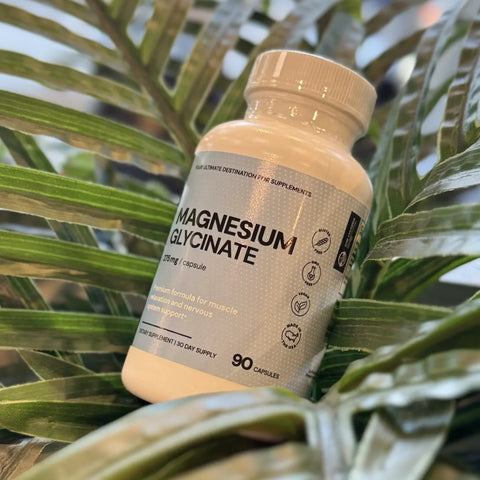
The Healthsupp Magnesium Glycinate 275mg is exactly what a good supplement should be: clean, straightforward, and effective, no unnecessary fillers, no proprietary blends hiding weak doses, no gimmicks.
What you get:
- 275 mg of magnesium glycinate per capsule
- 90 capsules : a full 3-month supply
- Formulated for maximum absorption
- Priced at $14.99 : one of the best value-for-quality options on the market
Magnesium glycinate isn't the kind of supplement that hits you like a pre-workout. It doesn't need to. What it does is work quietly in the background, improving your sleep, taking the edge off your stress response, supporting your muscles and your heart, and helping your body run the way it's supposed to.
Shop Magnesium Glycinate 275mg — $14.99 for 90 capsules
References
1. Rosanoff A. et al. (2012) — Nutrition Reviews. Nearly 48% of Americans do not consume enough magnesium through diet alone. pubmed.ncbi.nlm.nih.gov/22364157
2. Workinger J.L. et al. (2018) — Nutrients, NIH/PubMed. An estimated 45% of Americans are magnesium deficient; 60% of adults fail to meet the recommended daily intake. pubmed.ncbi.nlm.nih.gov/30200431
3. Zhang W. et al. (2025) — Int J Vitam Nutr Res, PubMed. Approximately 2.4 billion people worldwide don't consume enough magnesium. Large U.S. NHANES surveys consistently confirm widespread inadequate intake among American adults. pubmed.ncbi.nlm.nih.gov/41504160
4. Abbasi B. et al. (2012) — Journal of Research in Medical Sciences, PubMed. Randomized double-blind clinical trial: magnesium supplementation significantly improved sleep time, sleep efficiency, and serum melatonin levels compared to placebo. pubmed.ncbi.nlm.nih.gov/23853635
5. Mah J. & Pitre T. (2021) — BMC Complementary Medicine and Therapies, PubMed. Meta-analysis: oral magnesium supplementation reduced sleep onset latency by an average of 17.36 minutes compared to placebo (p = 0.0006). pubmed.ncbi.nlm.nih.gov/33865376
6. Hanna M. et al. (2025) — PMC/NIH. Narrative review on the biological mechanisms through which magnesium regulates the sleep-wake cycle, including GABA receptor activation and melatonin production. pmc.ncbi.nlm.nih.gov/PMC12535714
7. Lopresti A.L. et al. (2025) — PubMed. RCT on 155 adults: magnesium bisglycinate (250 mg/day) significantly reduced Insomnia Severity Index scores at 4 weeks vs. placebo (p = 0.049). pubmed.ncbi.nlm.nih.gov/40918053
8. Pickering G. et al. (2020) — Nutrients, PMC. Magnesium plays a key inhibitory role in regulating the stress response; a vicious cycle between magnesium deficiency and chronic stress is well documented. pmc.ncbi.nlm.nih.gov/PMC7761127
9. Boyle N.B. et al. (2017) — Nutrients, PubMed. Systematic review of 18 studies: magnesium supplementation shows a suggestive beneficial effect on subjective anxiety in vulnerable populations. pubmed.ncbi.nlm.nih.gov/28445426
10. Rawji A. et al. (2024) — Cureus, PubMed. PRISMA systematic review confirming preclinical and clinical associations between magnesium status, anxiety symptoms, and sleep quality. pubmed.ncbi.nlm.nih.gov/38817505
11. DiNicolantonio J.J. et al. (2018) — Open Heart, PMC. Subclinical magnesium deficiency identified as a principal driver of cardiovascular disease; 6–12 weeks of strenuous exercise can deplete magnesium stores. pmc.ncbi.nlm.nih.gov/PMC5786912
12. Sarić M.M. et al. (2025) — Nutrients, PubMed. Comprehensive review: low magnesium levels consistently associated with hypertension, type 2 diabetes, osteoporosis, migraines, and depression. pubmed.ncbi.nlm.nih.gov/41305676